How to Cover Screenplay Plot Holes – case study: Silence of the Lambs
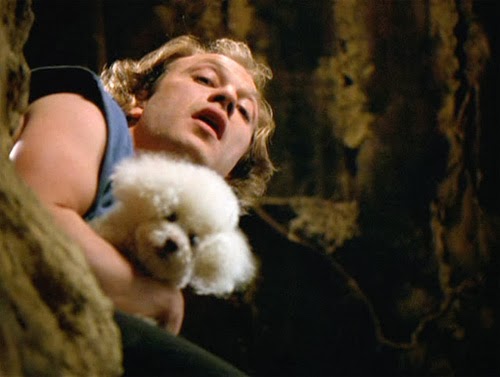
The Silence of the Lambs* is one of the great films. Some of these films that won all the awards really rankle me after a few years. I sort of get why it was popular at the time, but it hasn’t aged well (I’m looking at you, Forrest Gump). The Silence of the Lambs, however, I can watch over and over for multiple reasons: it’s a fantastic book adaptation, it contains multiple iconic performances, it does an incredible job of making us sympathize with a monster (Hannibal, that is), and it is epically quotable.
As a quick note: yes, I’m aware that certain issues in the film rub certain people the wrong way–to the point that it probably simply wouldn’t get made today–but as with any narrative, it’s good practice not to throw the baby out with the bathwater. You might even discover an amazing film along the way.
What we’re going to talk about today is three fairly substantial screenplay plot holes in The Silence of the Lambs, and why–at the end of the day–this did not stop the film from winning all the prizes and being compulsively watchable even 35 years after its release.
Now this isn’t to rag on the movie. I love this movie. It’s a staple in screenwriting courses, and–to be perfectly honest–it’s one of the rare “staples” that fucking well should be there. It’s a masterclass in taking an overwrought thriller novel and stripping it bare, to excellent effect–yes, despite the holes.
Here’s the lesson: almost all films have plot holes, so what’s important is not whether there are plot holes but how well the plot tracks even acknowledging them. If your story is strong enough, a pothole in the road won’t upset the apple cart. Of course you might catch heat from some dipshit reader who’s trying to make himself feel smart, but a good story can–and often does–overcome such problems. Keep going.
Specifically with this piece, I’ll assume you’re familiar with The Silence of the Lambs as in you’ve watched it multiple times, perhaps sort of obsessively. If you don’t know hit, however, go watch it immediately. Nevertheless, I’m going to put a short preamble here if you haven’t (and also for SEO purposes).
Introduction / Summary
As is often good practice, let’s start with a quick logline for The Silence of the Lambs. It’s useful to know what the film is about:
The Silence of the Lambs (1991): A young FBI trainee must enter the warped mind of an imprisoned psychiatrist with a taste for human flesh to profile–and catch–another serial killer before he skins his latest victim.
Clarice Starling is our FBI trainee, who gets thrown into the deep end because of her boss’ hunch (more on this later) that deranged psychiatrist/part-time cannibal Hannibal Lecter might know something about the pressing case of the active serial killer known as Buffalo Bill.
Throughout the film, we watch Clarice gain Hannibal’s confidence alongside her deeper investigation of the Buffalo Bill case. As the case escalates, Hannibal uses his knowledge of the case to negotiate a transfer–and uses the opportunity to escape. Clarice, meanwhile, investigates a forgotten lead in the case and finds herself face-to-face, alone, with Buffalo Bill himself.
Perhaps it’s obvious, but worth stressing as I’ve discussed this with more than one person who simply never thought of it: the “silence of the lambs” refers to a childhood story Clarice shares with Hannibal: after her father’s death, she was sent to live with distant family on a sheep ranch, and during the spring slaughter of the lambs, she was traumatized by the lambs’ human-like screaming. Clarice took one lamb and ran off; she was found mere hours later, her lamb was slaughtered, and she was sent to live in an orphanage.
Hannibal asks Clarice: “Brave Clarice. Will you let me know if ever the lambs stop screaming?”
That is, Hannibal is asking about the silence of the lambs. It’s a beautiful title, particularly as it ties into one of the most emotional parts of the story–Clarice’s vulnerable tale, and her extreme vulnerability in relating it to Hannibal: therapist, monster, confidant.
Plot Hole 1: The Connection Between Hannibal and Buffalo Bill
Obviously there’s no story at all if Clarice doesn’t meet Hannibal. It’s a massive stretch to imagine that someone like Jack Crawford would put a rookie like Clarice in front of a monster like Hannibal. Basically, it’s fine to suspend disbelief on this particular one-in-a-million shot because that’s literally (not figuratively) what the story is about.
This is not our problem.
The problem here is the following split: either 1) Crawford knew that Hannibal was withholding information crucial to the Buffalo Bill case, OR 2) Crawford was taking shots in the dark and got very, very lucky.
Now it’s pretty clear from the way things play out, even in the scene where Crawford proposes the Hannibal project to Clarice, that Crawford knows Hannibal has information. Clarice even asks him this–particularly as Crawford plucks her out of training and pushes her to do the job immediately–but Crawford simply doesn’t answer. This is an issue that could literally be dealt with in a single line of exposition, but the film chooses not to do so.
To be fair, we see Crawford keep his cards close to his chest throughout the film, so it’s not out of character that he would talk around this issue. Arguably, he likely does not want to make Clarice nervous before she engages in this already-difficult task.
It still never provides any indication of how the hell Crawford would be aware that Hannibal is the guy for the job. Crawford claims that he’s interviewing all the serial killers in custody and that this is routine procedure, but Crawford also wants this done yesterday.
The pieces are close enough together that we can sort of infer that Crawford suspects Hannibal is withholding. Note, however, that it’s never actually stated in the film or in the screenplay. The screenplay only mentions Hannibal’s offer to help In digging for this, however, it’s worth remembering that this is based on a book. Does the book give more information?
Indeed. After Raspail’s head is found in the jar, Crawford delivers a throwaway line that Lecter had initially “offered to help” in the Buffalo Bill case but that Crawford, knowing how unhelpful and dangerous Lecter had been previously–referencing the story of Manhunter/Red Dragon–he dismissed the offer. As the Bill problem progresses, however, Crawford realizes that Lecter may in fact be holding crucial information. In the screenplay, a similar scene exists, but the “offer to help” was only after speaking to Clarice, so it doesn’t address Crawford’s motivation; this scene was totally reworked in the film and no such line exists in the film’s final edit.
That’s not to say it would necessarily have made the film better to include such a line, but we do get a crumb dropped from the table, but only late enough that we already have to buy the mystery without. When Clarice directly asks Crawford whether he sent her to Hannibal for information on Buffalo Bill, Crawford tells her (00:38:09) that he sent her to Hannibal apprising her of the situation because Hannibal would sense an agenda and “toy with [her] then turn to stone.”
Just like Crawford to talk around things and suggest rather than state directly; it puts us, as the audience, on the need-to-know footing that Clarice, clearly, is on. This is interesting from a storytelling perspective. Clarice, obviously, is the audience’s avatar and it makes sense for us to get information dripped to us in the same way that it does to her.
Importantly, however, it doesn’t resolve the fundamental question of why Crawford suspected Hannibal would be of assistance.
It’s interesting that one little sentence about Hannibal’s offer to Crawford would fix the problem and it wasn’t included. Perhaps it was never shot, or was cut in editing, but this is doubtful given that the screenplay only mentions it in the context of Clarice’s visits and even that didn’t make the cut.
The important thing from a writing perspective here is that by this point we’re invested in the motions of the plot. We know and rather like Hannibal, shameless murderer or not, we’ve seen Bill abduct the next girl, and we’ve been through enough with Clarice that we want to see her find this guy. Finer points of logic be damned.
This is an excellent demonstration of how much we read into a film by the time the story’s flywheel is turning quickly enough. We want to make things work, so we assume/ascribe motivations even if they aren’t technically clear. But that’s how things are supposed to work; after all, what is story if not a series of guided inferences?
That’s exactly what Demme has done here by cutting Ted Tally’s script so brutally close to the bone that we have to infer some pretty big things–note how much of this is down to Crawford’s fairly inscrutable communication style–but importantly, it actually succeeds.
Plot Hole 2: How Does Clarice Get Hannibal’s Drawings?
During their final in-person meeting, Clarice gives Hannibal an offering: his drawings that we saw during their first meeting.
These, we were told, were taken away from Hannibal as punishment for Hannibal’s (ahem) encouragement of Miggs’ suicide. In the meantime, things go sour between Clarice, Crawford, and Chilton, the greasy doctor overseeing Hannibal. Note that when Clarice visits Hannibal in Memphis, carrying the drawings, she does this by sneaking past Chilton; once Chilton is aware of her presence, he swoops in to kick her out.
This leaves hanging the question of how Clarice procured the drawings themselves. So they were missing from Hannibal’s cell, Clarice has a falling out with the doctor in charge of Hannibal, yet they turn up in her possession as an offering to Hannibal later in the story.
From what the film tells us, we might consider that this is a bit more of Crawford pulling strings and working his magic. This might be possible. It might even be Clarice doing something clever on the inside, which she’s more than capable of doing. Neither Crawford nor Clarice seems terribly bothered about following the rules to the letter when it’s an issue of getting the job done.
Once again, we can turn to the novel to see if it sheds light on what, precisely, happened. In this case, we get a reasonable story. It’s completely left out of the film.
So, in the book, it turns out to be Clarice’s clever ploy. She has earned the trust of Barney, Hannibal’s security guard at Chilton’s hospital. After Hannibal’s transfer, she asks Barney what has been left over in Hannibal’s cell: he tells her the drawings and some cookbooks–and bonus points if you notice the drawings are inexplicably back after they had been removed for Hannibal’s punishment, which is also in the book–and Clarice asks Barney to grab these for her.
In this case, Clarice understands that she can use Hannibal’s belongings–that Chilton callously left behind–as an offering, and she uses her own wits and people skills to get hold of them.
The fact that this is explained clearly in the book but is left out of the film is a plot hole, obviously, but you can judge for yourself whether the film works better without. For my money, whatever little hiccup comes from wondering where the drawings went is easily balanced by not including an entire scene to explain this one little concern.
This is a great example of where introducing a plot hole is worth the story value of, in this case, Clarice having the drawings to offer Hannibal. It’s always a trade-off, but I think in this case it’s well justified.
Plot Hole 3: How is Jame Gumb Related to Mrs. Lippman?
The entire third act of The Silence of the Lambs is the point after Clarice and Crawford get a dressing down. Clarice goes rogue, checking out Belvedere, Ohio on her own with no backup. The point here is that this is dangerous, particularly because she’s alone.
The classic buildup sequence shows Clarice, having been told by Crawford that the FBI is on its way to go after Buffalo Bill/Jame Gumb in Calumet City, near Chicago. Clarice persists in finding clues in Ohio, 400 milse away, that would link Gumb directly to Fredrica Bimmel. As Clarice follows the trail of breadcrumbs from Fredrica Bimmel’s father to her friend to Mrs. Lippman’s house, we intercut with the FBI gearing up to invade Gumb’s house.
Of course when Clarice knocks at Mrs. Lippman’s house, Gumb himself answers the door. Oops.
The question, then, is this: if the FBI has good information, how on earth is Gumb 400 miles away from where they thought he was? For that matter, we’re meant to believe that “he covets what he sees every day,” which means that he was interacting with Frederica on a regular basis. She lives 400 miles away.
There’s just no explanation for how Gumb ended up in this random spot or how he knew her. We can infer that there’s some story here, given that Fredrica sewed–as we see from her house–and that Gumb sewed–and that Fredrica’s friend mentions she used to do alterations for Mrs. Lippman. But that’s it. That’s a fairly weak implication here–particularly insofar as it sends Clarice directly into the lion’s den.
Once Clarice is in the house, it’s sort of immaterial how Gumb got there; we only care that Clarice makes it out alive. It’s a great example of pace and rhythm making the story hold together even when the story, in the most technical sense, doesn’t work.
Again, we can see whether it would help to know the real story. As per the novel–notably in an exegesis after the main events of the story–Gumb worked for a leather company in Calumet City, who outsourced their linings to Mrs. Lippman in Belvedere. Gumb and Lippman struck up some sort of friendship and she “died on a trip to Florida with Gumb,” after which Gumb inherited her house and business, its tailors such as Fredrica apparently included.
So given that even Thomas Harris couldn’t seem to jam the complicated Gumb/Lippmann relationship into the meat of the main story, it’s pretty forgivable that the film would give it short shrift. We know just enough to understand the sewing connection, which is enough for some sort of tenuous link.
We also, of course, see Mrs. Lippmann’s body in a tub full of lime, which gives us some indication of how the Gumb/Lippmann partnership ended.
And–importantly–the fast-paced intercut scene probably accounts for why we don’t care so much. The scene is built up quite well; we have no reason to expect that the information will be different from what we are told by Crawford.
It’s a classic “oh shit” moment, of course, when Gumb opens the door to Clarice instead of armed FBI agents. It’s now life or death. The suspense here overwrites any dangling questions. Plot hole or not, this is good writing.
Conclusion
Remember, when you dig deep enough, you’ll find holes in any plot. You can’t just tell all the things all the time or you’d become James Joyce.
The art of good writing is to pick the situations where the screenplay plot holes aren’t enough to disrupt the viewer/reader’s enjoyment of the plot. Much of this has to do with giving enough hints that the reader can safely infer a plausible story (that is, suspend disbelief). Or–if all else fails–ramp up the pace and make the stakes as high as possible. Wanting to see that your characters make it out alive is more important than tying up some (relatively) immaterial backstory.
Now it’s very likely that you yourself will be aware of certain plot holes. The question, really, is whether others will also catch these. They might not. My advice would be to get several people to read your work. If multiple people hang on the same point, perhaps you need to answer the question. If people are willing to take the story as it stands, you’re probably fine.
Obviously there are going to be readers who pull you up on things like this. That’s always a concern, but many readers are bitter, underpaid, and looking for reasons to feel superior. Pity them and move on. As a script editor recently mentioned to me, “it’s possible that you just need to find better readers.”
Precisely.
Exercises:
- Inferential Connection
Demme and Tally guide the viewer with just enough information that you can say “oh, it makes sense if I look at it that way…”
It’s just enough connective material to allow the viewer to infer a connection without actually stating the connection.
First, write a 1-2 page scene where a character acts based on knowledge that has no obvious source–”How do they know this/have this?”
>Note: you have to know this. You’re not just making shit up here. The question is whether the exposition is necessary in the actual film.
Second, consider how you can add enough visual or contextual detail–even “throwaway” lines–before that we could infer a plausible reason for this.
Third, stress test by giving it to a reader and asking the reader what she thinks happened. If she comes up with a fairly similar story to what you know to be the actual story, then you’re good.
- Know When to Leave It Out
This is about when it’s better NOT to fix a plot hole. First, you need to identify a hole or missing information in your script.
Create two versions of the scene: one where the hole is patched, and the other where the hole remains. Keep the narrative payoff.
Contrast these versions: which moves faster, which feels more cinematic, which makes the reader care more?
Note how–quite often in fact–cutting hard information improves the narrative flow of the story.
- Need-to-Know Basis
The idea of the “need-to-know” basis is that a person is only given sufficient factual information to understand her task at hand.
This is precisely what Crawford does with Clarice. Since we’re getting, for the most part, the same information as Clarice, it puts us on her level. We understand her frustrations and therefore empathize with her situation.
In many cases, there might be a perfectly good explanation for a situation, but the protagonist doesn’t understand what this is. It’s entirely possible that the audience doesn’t need to understand, either.
First, write a scene where the protagonist is being tested or manipulated with a certain amount of information missing.
Second, ensure that the audience only knows as much information as the protagonist knows.
Third, include a moment where the protagonist asks the exact question that the audience must be asking by this point. Make sure the response is evasive or misleading.
Make sure that the scene ends without this clearly resolving.
These gaps exist in reality–and for the individual character–highlighting the gaps puts us in the character’s position.
(I’m writing screenplay plot holes for SEO!)